

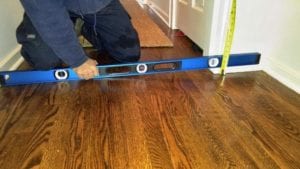
If you ever feel frustrated when you notice a little give in your floors when walking across them, like they droop in certain places and in general are uneven, we understand. However, sagging floors are more than just unsightly; they are potentially dangerous to you and your home.
Sagging floors might indicate something simple, such as a damaged section of the wood under your flooring. It could mean that one of the supports is failing or could be a more serious sign of underlying foundation settlement. But, how do you know if you have sagging floors?
Signs of Sagging Floor Joists
- Evidence of moisture, wood rot, and compression of the floor joists in your crawl space
- Sloping, uneven floors
- Gaps between the floor and interior walls
- Doors that are sticking that didn’t at some point
- Gaps between existing columns in your crawl space
- Shimming between existing columns and girders in your crawl space or basement
To understand how severe your sagging floor is and to figure out a plan on how to fix sagging floors, contact a local foundation repair specialist. Finding a permanent solution to your floors and potential sinking foundation is the only way to give you peace of mind.
Why it’s so important to Fix Sagging Floors
Sagging floors can and often lead to a more serious problem with your home. You may have a wet crawl space, and when the crawl space isn’t sealed off and protected from moisture, it can damage floor joists, create wood rot, attract unwanted pests, and promote mold and bacteria growth.
BDB Foundation Repair provides crawl space encapsulation Omaha using a proven system to create a fully waterproof area beneath your house. We install durable vapor barriers on walls and liners on floors. We also install sump pumps when needed. These products will help to seal off the crawl space to keep out moisture, humidity and unwanted critters.
Many homeowners do not give much thought to this space below their home, but they should. What happens in the crawl space can have an influence on the rest of the home, including your floors. Fixing sagging floors is well worth the time and expense. It’s a great investment in the health and value of your home.
Call BDB Foundation Repair at 402-779-3165 or contact us onlineto get your free evaluation and estimate.
I need someone to come and look at my kitchen floor area
Hi Ida – Please call us at 402-779-3165 or visit our “contact us” page to get in touch with us and we would be happy to help!
I live in a condo. It feels like a section of the floor is sagging. Is this a problem? There is a storage room below my unit. If a problem, who is responsible?
Our house had a mold problem in 2009 and was remediated before we bought it. Evidently, the sub floor was not done correctly. My Husband goes under our house at least twice a year to check for mold and leaks. All is well in that regard. The floor bounces and squeaks as we walk through the house. I have even fallen as it is so bad in the master bedroom. Can you advice us as to who in our area can help with our floors?