

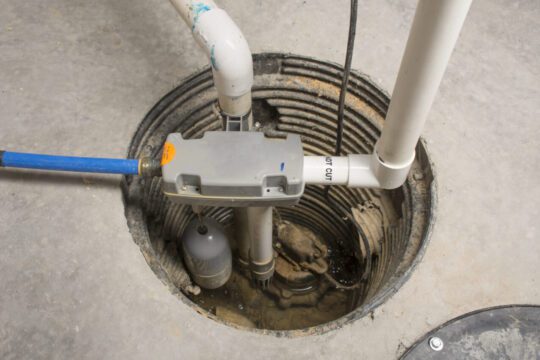
When is the right time to install a sump pump? The short answer: ASAP.
A sump pump is a straightforward piece of equipment that is used to send water out and away from your home. Sump pumps are installed in the lowest point of your basement floor in a basin. Water is pulled into a filter trap and is then directed out of your home and away from the foundation through a discharge pipe.
Basically: a sump pump helps to prevent flooding in your basement, which can cause extensive damage to your home.
When to install:
Sump pump installation is most effective before the rainy season: which in the Midwest will begin in April and can last through mid-summer. You may also remember times when snow melt has caused basement flooding issues. It’s always best to install it on a clear day when there hasn’t been any recent flooding. It will be easier to dig the hole and set the pump if the ground is relatively dry.
When to replace:
In general, sump pumps should be replaced every 7 to 10 years. The life of your sump pump will be influenced by the frequency of use and the volume of water it’s required to displace. You can extend your sump pump’s lifespan by regularly cleaning the pump and making sure it is not overextending itself by continuously running. If you are unsure of the age or condition of your sump pump, you should probably replace the pump, or have a plumber come to inspect, service, and clean the pump.
When to test:
Once you have a sump pump installed, you will want to ensure it works properly. A simple way to test the pump is to put about 5 gallons of water into the basic until it activates and begins to drain. You will want to make sure all the parts are working correctly and it should shut off quickly once the water drops below the shut-off level.
What extras you should consider:
BDB Basements recommends two extras for your sump pump: a battery back-up, a high-water alarm, and a check valve.
- Battery Back-Up: If the power goes out, the back-up will automatically activate and the sump pump will continue to function for several hours. So, if the power goes out, you can rest assured that your sump pump will continue to work to protect your home from flooding.
- High-Water Alarm: Be notified is your pump stops working so that you can perform maintenance before it is too late.
- Check Valve: A check valve prevents water from the sump pump line from draining back into the basin after the water has already been discharged.
Dealing with a flooded basement can be a real headache, but it can 100% be prevented. A sump pump can protect you from even one major flooding problem. While you may not think a sump pump is necessary, it is worth having a one installed even if there is a slight chance that you may need it. Install a sump pump in your home today, before you have to pay for water damage remediation.
Are you looking for your sump pump installation experts? BDB Foundation Repair can install a quality system with a sump pump alarm and a backup battery. Contact us for your sump pump installation today!