

Your home’s foundation plays a crucial role in maintaining its structural integrity. Over time, however, various factors can contribute to foundation settlement, leading to potential issues that may compromise the stability of your home. Let’s take a look at the signs, causes, and solutions of foundation settlement:
Signs of Foundation Settlement:
Recognizing the early signs of foundation settlement is essential for homeowners to take proactive measures before the problem escalates. Some common indicators include:
- Cracks in the Walls and Floors: One of the most noticeable signs of foundation settlement is the appearance of cracks in the interior and exterior walls, as well as on the floors of your home.
- Uneven or Sloping Floors: If you notice that your floors are no longer level or that certain areas feel uneven or sloped, it could be a sign of foundation settlement.
- Sticky Doors and Windows: Difficulty in opening and closing doors or windows may indicate that the foundation has shifted, affecting the alignment of these elements.
- Separation of Walls and Ceilings: Foundation settlement can lead to the separation of walls from ceilings, creating visible gaps that suggest structural issues.
- Bowed or Leaning Walls: If you observe walls that are bowing or leaning, it’s a clear indication that the foundation is under stress and may be settling unevenly.
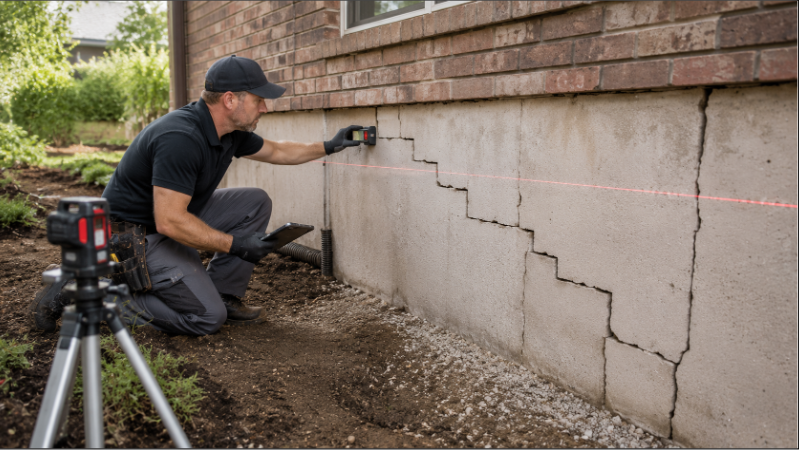
Causes of Foundation Settlement:
Understanding the underlying causes of foundation settlement is crucial for implementing effective solutions. Several factors contribute to this issue, including:
- Soil Movement: Changes in soil moisture content can lead to soil expansion and contraction, causing movement beneath the foundation. Clay soils, in particular, are prone to significant volume changes.
- Poor Soil Compaction: If the soil beneath the foundation was not adequately compacted during construction, it can compress over time, leading to settlement.
- Water Saturation: Excessive water around the foundation can soften the soil, reducing its ability to support the weight of the structure. This is often caused by poor drainage or plumbing issues.
- Tree Roots: Large tree roots near the foundation can extract moisture from the soil, causing it to shrink and leading to foundation settlement.
- Faulty Construction: In some cases, foundation settlement may result from poor construction practices, such as inadequate footings or the use of substandard materials.
Solutions for Foundation Settlement:
Addressing foundation settlement requires a tailored approach based on the specific causes and severity of the issue. Here are some effective foundation repair solutions that we utilize at BDB Foundation Repair:
- Underpinning: Underpinning involves strengthening the foundation by extending its depth or providing additional support. This can be achieved through methods like helical piers, push piers, or micropiles, depending on the soil conditions.
- Grading and Drainage: Improving the grading around your home and ensuring proper drainage can help manage water flow away from the foundation, preventing soil saturation and reducing the risk of settlement.
- Waterproofing: Implementing waterproofing measures, such as installing a drainage system or applying sealants, can protect the foundation from excess moisture and mitigate the risk of settlement.
- Tree Root Management: If large trees are contributing to foundation settlement, strategic tree root pruning or removal may be necessary to prevent further damage.
- Professional Inspection and Repair: Engaging the services of the qualified foundation repair professionals at BDB Foundation Repair is crucial for accurately assessing the extent of the settlement and determining the most appropriate course of action.
BDB Foundation Repair Has the Solutions You Need
At BDB Foundation Repair, we recommend regular inspections, prompt identification of warning signs, and proactive measures to help prevent extensive damage and costly repairs. If you suspect foundation settlement, consulting with a foundation repair contractor at BDB Foundation Repair is the first step toward ensuring the long-term stability and safety of your home. Contact BDB Foundation Repair to help you with solutions for your basement.